2026
Do Deep Ensembles Actually Capture Uncertainty in Graph Neural Networks?
Pedro C. Vieira, Pedro Ribeiro, Viacheslav Borovitskiy
Submitted to NeurIPS, Pre-print, 2026
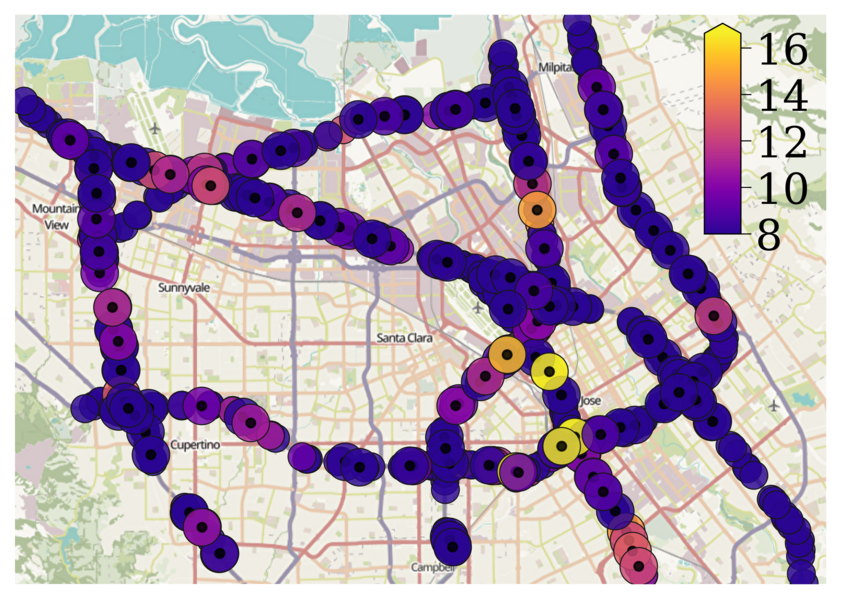
We investigate Deep Ensembles (DE) of Message Passing Neural Networks and reveal a phenomenon we call epistemic collapse. Across seven datasets, DEs produce extremely low model diversity. While they stabilize training and improve point-estimation, they offer negligible gains for uncertainty quantification over a single model. Having ruled out weight-space convexity, we suggest this collapse is driven by convexity-like behavior in function-space.
Do Deep Ensembles Actually Capture Uncertainty in Graph Neural Networks?
Pedro C. Vieira, Pedro Ribeiro, Viacheslav Borovitskiy
Submitted to NeurIPS, Pre-print, 2026
We investigate Deep Ensembles (DE) of Message Passing Neural Networks and reveal a phenomenon we call epistemic collapse. Across seven datasets, DEs produce extremely low model diversity. While they stabilize training and improve point-estimation, they offer negligible gains for uncertainty quantification over a single model. Having ruled out weight-space convexity, we suggest this collapse is driven by convexity-like behavior in function-space.
2025
Studying and Improving Graph Neural Network-based Motif Estimation
Pedro C. Vieira#, Miguel E. P. Silva, Pedro Ribeiro (# corresponding author)
Pre-print 2025
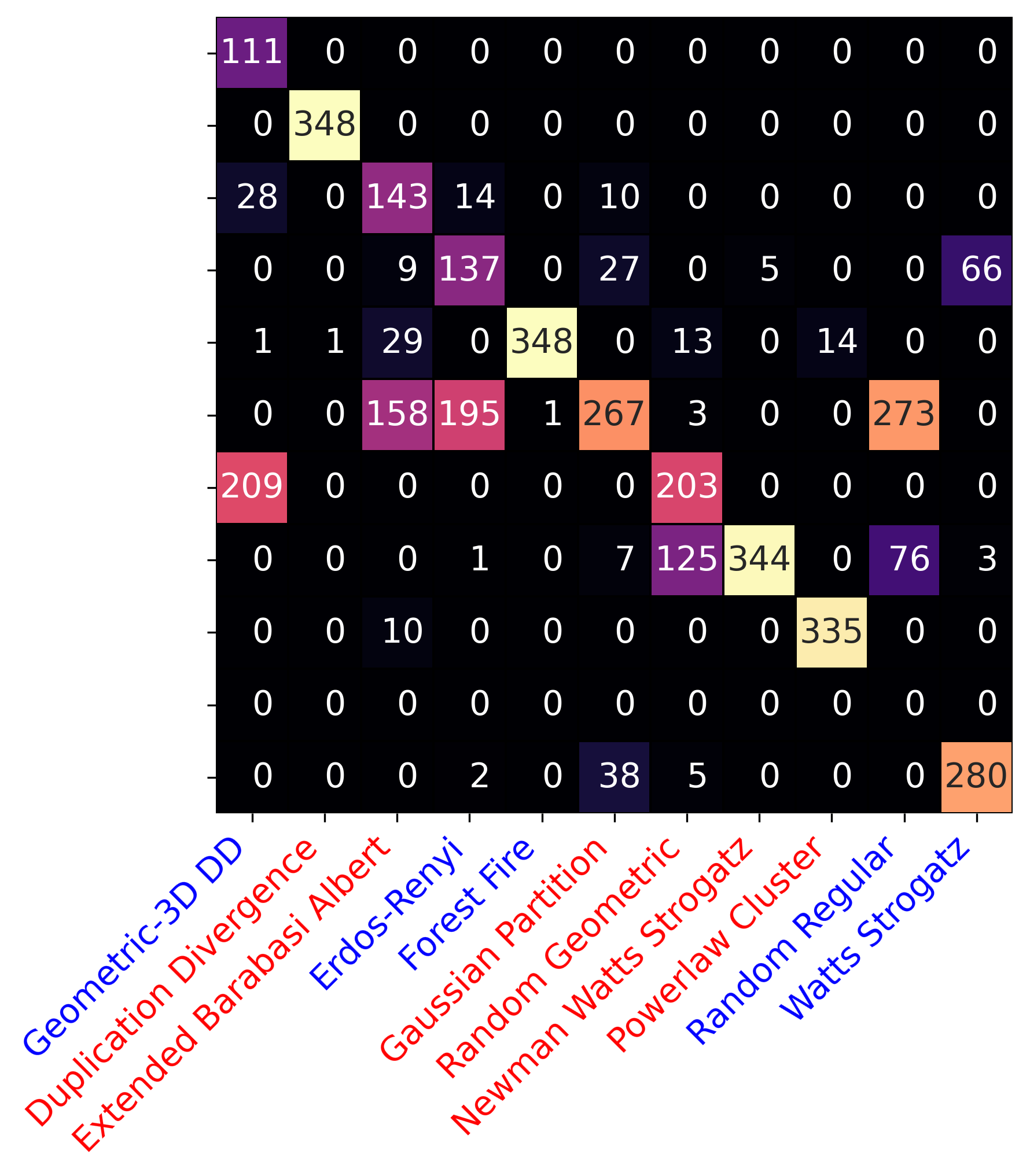
We investigate how Message Passing Neural Networks (MPNNs) perform at estimating significance-profiles of synthetic and real-world graph datasets. We discover that despite the known theoretical limitations of MPNNs, surprisingly, they can make useful estimates, especially under a specialized multi-target regression problem formulation.
Studying and Improving Graph Neural Network-based Motif Estimation
Pedro C. Vieira#, Miguel E. P. Silva, Pedro Ribeiro (# corresponding author)
Pre-print 2025
We investigate how Message Passing Neural Networks (MPNNs) perform at estimating significance-profiles of synthetic and real-world graph datasets. We discover that despite the known theoretical limitations of MPNNs, surprisingly, they can make useful estimates, especially under a specialized multi-target regression problem formulation.
2024
The Dynamic-Loose Octree: A Spatial Index Structure Towards Time-Efficiency
Edgar Carneiro*, Pedro C. Vieira*, Alexandre Valle de Carvalho, Marco Amaro Oliveira (* equal contribution)
Submitted for Peer-Review 2026
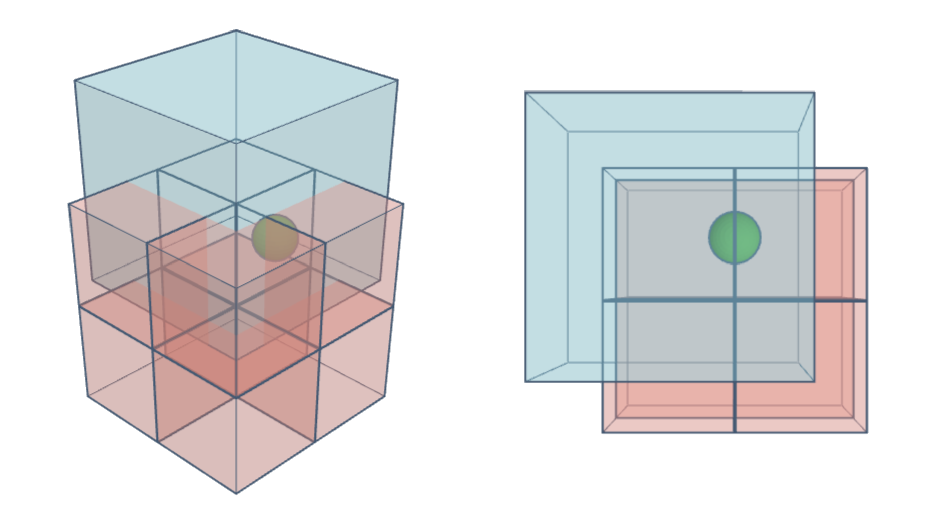
We join two popular variants of octrees: dynamic octrees and loose octrees; while solving the conflicts that arise when the two variants work together. We systematically study the performance of our proposed structure---Dynamic-Loose Octree---in synthetic and real-world benchmarks showing that the target logarithmic performance is achieved.
The Dynamic-Loose Octree: A Spatial Index Structure Towards Time-Efficiency
Edgar Carneiro*, Pedro C. Vieira*, Alexandre Valle de Carvalho, Marco Amaro Oliveira (* equal contribution)
Submitted for Peer-Review 2026
We join two popular variants of octrees: dynamic octrees and loose octrees; while solving the conflicts that arise when the two variants work together. We systematically study the performance of our proposed structure---Dynamic-Loose Octree---in synthetic and real-world benchmarks showing that the target logarithmic performance is achieved.
S+t-SNE - Bringing Dimensionality Reduction to Data Streams
Pedro C. Vieira*#, João P. Montrezol*, João T. Vieira, João Gama (* equal contribution, # corresponding author)
Advances in Intelligent Data Analysis XXII 2024
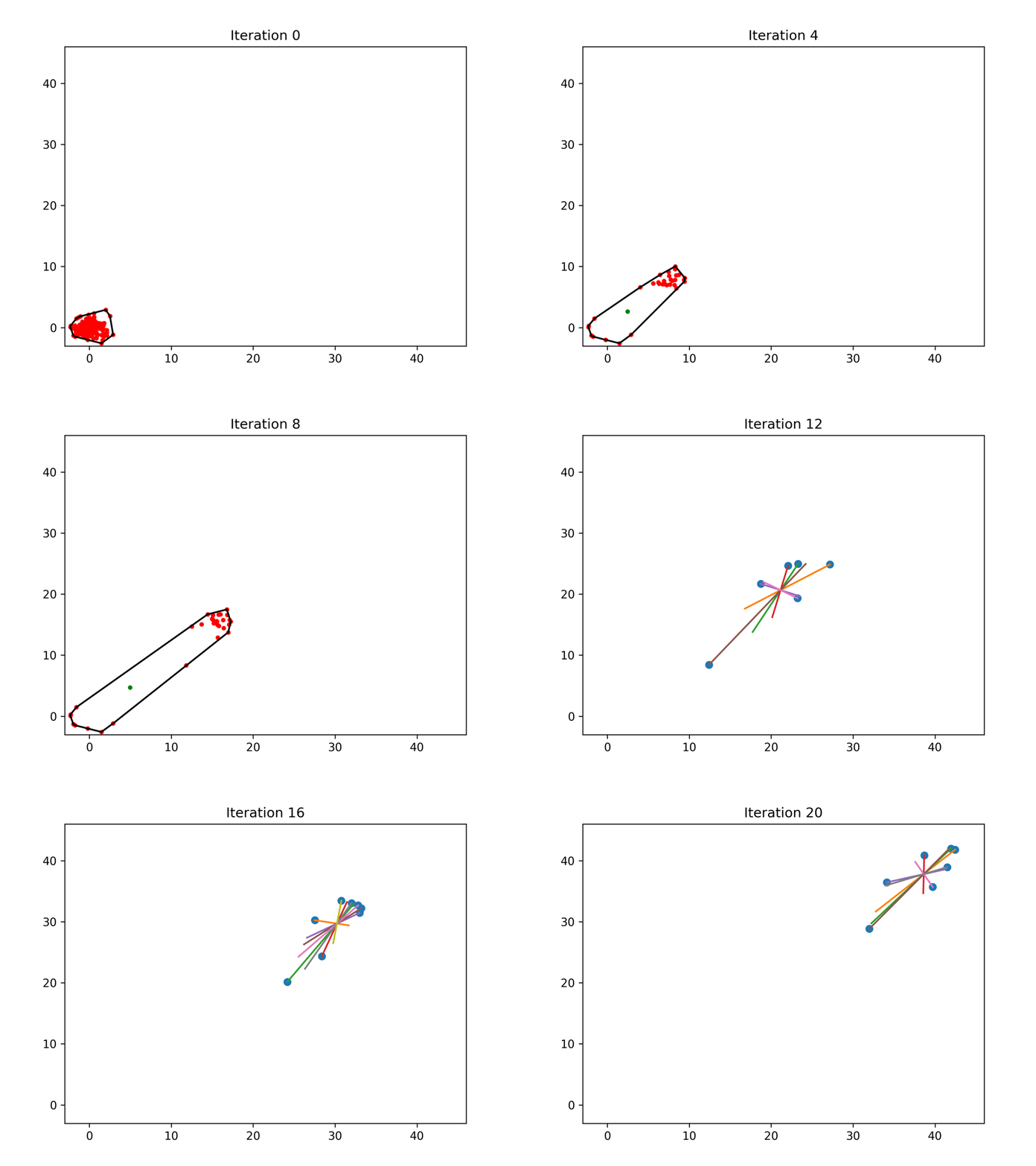
We adapt t-SNE to data streaming scenarios. We solve the issues of massive data accumulation by constructing convex hulls over the embeddings. To handle drift we develop exponential cobweb slicing to track the regions of the hull that grew obsolute as more data is incorporated in the projection. We validate or findings on synthetic data and on MNIST.
S+t-SNE - Bringing Dimensionality Reduction to Data Streams
Pedro C. Vieira*#, João P. Montrezol*, João T. Vieira, João Gama (* equal contribution, # corresponding author)
Advances in Intelligent Data Analysis XXII 2024
We adapt t-SNE to data streaming scenarios. We solve the issues of massive data accumulation by constructing convex hulls over the embeddings. To handle drift we develop exponential cobweb slicing to track the regions of the hull that grew obsolute as more data is incorporated in the projection. We validate or findings on synthetic data and on MNIST.